
i'm bored.
-
ezernut9mm

- Posts: 9141
- Joined: July 21, 2006, 9:37 pm
- Location: KCMO

Re: i'm bored.
tomorrow i will start the test of needs.
always
"i believe i've achieved satisfaction".-bubbles
"should i be gettin" baked for this boys?"-bubbles
i could no longer keep "r.i.p.ing" all of our fallen brothers and sisters, so i say here, slick loads of love and much respect to all you beautiful people.
"i believe i've achieved satisfaction".-bubbles
"should i be gettin" baked for this boys?"-bubbles
i could no longer keep "r.i.p.ing" all of our fallen brothers and sisters, so i say here, slick loads of love and much respect to all you beautiful people.


Re: i'm bored.
Chris,
It sounds as if the vocal membership has spoken
My take on your truck would shock most of my long-term acquaintances; especially my dear departed Dad.
I have never been one to leave anything alone; if it had two hundred horses, it needed three, or four, or more!
Your truck is about as clean and original as they can be found, and I personally would try the bolt-ons before changing to something which might prove to be a real pain.
I certainly understand the need for the V-8 sound, but as others have stated, the 300 really sings with some added mixture flow.
I also understand your new-found desire to make this one the "keeper"; thus it needs to be what YOU want it to be, but the original trucks tend to hold value better ( just in case ).
).
You've got the parts many of us aspire to obtain; they certainly can equal the stock 302's original output; give them a try; then if not satisfactory, do what it takes, (or, as others have stated, pick up another project like the rest of us!)
 (maybe slightly less!)
Paul
It sounds as if the vocal membership has spoken
My take on your truck would shock most of my long-term acquaintances; especially my dear departed Dad.
I have never been one to leave anything alone; if it had two hundred horses, it needed three, or four, or more!
Your truck is about as clean and original as they can be found, and I personally would try the bolt-ons before changing to something which might prove to be a real pain.
I certainly understand the need for the V-8 sound, but as others have stated, the 300 really sings with some added mixture flow.
I also understand your new-found desire to make this one the "keeper"; thus it needs to be what YOU want it to be, but the original trucks tend to hold value better ( just in case
). You've got the parts many of us aspire to obtain; they certainly can equal the stock 302's original output; give them a try; then if not satisfactory, do what it takes, (or, as others have stated, pick up another project like the rest of us!)
(maybe slightly less!)Paul
The Ford Orphanage
Life's too short for boring vehicles!
My quest to develop a universal solvent is held up by the lack of a storage container.
Paul
Life's too short for boring vehicles!
My quest to develop a universal solvent is held up by the lack of a storage container.
Paul
-
ezernut9mm
- Posts: 9141
- Joined: July 21, 2006, 9:37 pm
- Location: KCMO
Re: i'm bored.
paul, you are no help! lol. i am going to start unbolting the intake and exhaust. i will need a distributer as well. i don't think the stock one will run with an aftermarket intake and carb.
always
"i believe i've achieved satisfaction".-bubbles
"should i be gettin" baked for this boys?"-bubbles
i could no longer keep "r.i.p.ing" all of our fallen brothers and sisters, so i say here, slick loads of love and much respect to all you beautiful people.
"i believe i've achieved satisfaction".-bubbles
"should i be gettin" baked for this boys?"-bubbles
i could no longer keep "r.i.p.ing" all of our fallen brothers and sisters, so i say here, slick loads of love and much respect to all you beautiful people.
Re: i'm bored.
Pick up a TFI module, remote mount it, and you're in business! The "lope-a matic", if that's what yours is, will work, just not well!
http://www.ebay.com/itm/NEW-Motorcraft- ... 5d&vxp=mtr
Paul
http://www.ebay.com/itm/NEW-Motorcraft- ... 5d&vxp=mtr
Paul
The Ford Orphanage
Life's too short for boring vehicles!
My quest to develop a universal solvent is held up by the lack of a storage container.
Paul
Life's too short for boring vehicles!
My quest to develop a universal solvent is held up by the lack of a storage container.
Paul
-
ezernut9mm
- Posts: 9141
- Joined: July 21, 2006, 9:37 pm
- Location: KCMO
Re: i'm bored.
thanks paul. you're not supposed to encourage me. lol
always
"i believe i've achieved satisfaction".-bubbles
"should i be gettin" baked for this boys?"-bubbles
i could no longer keep "r.i.p.ing" all of our fallen brothers and sisters, so i say here, slick loads of love and much respect to all you beautiful people.
"i believe i've achieved satisfaction".-bubbles
"should i be gettin" baked for this boys?"-bubbles
i could no longer keep "r.i.p.ing" all of our fallen brothers and sisters, so i say here, slick loads of love and much respect to all you beautiful people.

Re: i'm bored.
here is a good source for balence questions:
http://phystutor.tripod.com/stang/engines/small.html
me personally...horsepower ratings on the particular 302 engine you choose will be all in its combination: CC's of the heads, compression ratio, cam used, intake used, means of fuel and air to the engine (either carb or EFI), and your exhaust manifolds, exhaust, mufflers and even the exhaust pipe size, wheather it has a H pipe or X pipe etc. a 81 302 was not the biggest horsepower engine in the world. however with a cam, roller rockers, 4v carb or EFI it could be quite the performer. How much is enuff horse power to suit your needs? me personally if you can get 225 to 300 on engine along, i believe that to be good.
We experimented with mustang 302s, cams, heads, intakes, headers (both short and long), total timing, underdrive pulleys, different air filters and on dynos, I ran a stock class where you couldnt use anything but stock cast iron heads, stock roller lifters/roller cam, but you could shave the heads, do 5 angle valve jobs etc etc and there is quite a bit of potential in a 302!
as I mentioned in one of my post before, if I can get 300 hp out of a basically stock HO 302 mustang engine, and put about 100 to 125 horses of nitrous on it. I will be happy.
according to book i have a 5.0L EFI V8 puts out between 145 @3400 rpm to 205 hp @4000 rpm and 260 to 275 ft lbs of torque @2000 rpm(Source page 31 FORD F-Series Pickup owners bible by moses Ludel
http://phystutor.tripod.com/stang/engines/small.html
me personally...horsepower ratings on the particular 302 engine you choose will be all in its combination: CC's of the heads, compression ratio, cam used, intake used, means of fuel and air to the engine (either carb or EFI), and your exhaust manifolds, exhaust, mufflers and even the exhaust pipe size, wheather it has a H pipe or X pipe etc. a 81 302 was not the biggest horsepower engine in the world. however with a cam, roller rockers, 4v carb or EFI it could be quite the performer. How much is enuff horse power to suit your needs? me personally if you can get 225 to 300 on engine along, i believe that to be good.
We experimented with mustang 302s, cams, heads, intakes, headers (both short and long), total timing, underdrive pulleys, different air filters and on dynos, I ran a stock class where you couldnt use anything but stock cast iron heads, stock roller lifters/roller cam, but you could shave the heads, do 5 angle valve jobs etc etc and there is quite a bit of potential in a 302!
as I mentioned in one of my post before, if I can get 300 hp out of a basically stock HO 302 mustang engine, and put about 100 to 125 horses of nitrous on it. I will be happy.
according to book i have a 5.0L EFI V8 puts out between 145 @3400 rpm to 205 hp @4000 rpm and 260 to 275 ft lbs of torque @2000 rpm(Source page 31 FORD F-Series Pickup owners bible by moses Ludel
1965 SWB 460 C6 AUTO "Red Barron Red"
1965 SWB Going 302 w/C4 Auto (Matthew's)
1969 Dodge Charger "replica General Lee" 440 w/727 (Mine)
If you sent your Truck out to a restoration shop, you did NOT build it, jus sayin!
Re: i'm bored.
also:
http://phystutor.tripod.com/stang/engines/50.html
In the early '80s the horsepower wars were back. Ford's entry in this race was the new Fox chassis based Mustang powered by the newest member of the Small Block family, the 5.0 High Output.
Fed initially by a 2V carburetor in 1982, followed by a Holley 4V carburetor, later by speed-density fuel injection, and ultimately by a mass airflow injection system, the 5.0 inched its way up from around 157 HP in 1982 to 225 HP in 1987. The 1985 and later engines feature roller tappet camshafts and factory short-tube headers; 1986 and later engines feature a ram-tuned intake system.
The 1993 5.0 Cobra featured SVO GT-40 heads and intake manifold, better flowing exhaust, 65 mm TB, 24# injectors, 70 mm MAF and a recalibrated EEC-IV computer. Conservatively rated at 235 HP (was actually around 265 FWHP).
5.0 High Output -- Chronology of Changes 1982 -- 157 HP @ 4200
Introduction of the 5.0 High Output engine
Lighter (120 lb.) thin wall 302 block, with old-style 2-piece rear main bearing seal
Reciprocating assembly changed to utilize 50 oz.-in. unbalance flywheel and 34 oz.-in. damper
Cast pistons, 8.4:1 C.R.
Heads with smaller "high velocity" ports and valves
"1973 Torino" profile flat tappet camshaft, duration 260° intake, 278° exhaust, lift of .416" intake, .444" exhaust
Double row roller timing chain
Aluminum intake manifold
369 cfm Motorcraft 2-barrel carburetor
Dual snorkel, high dome cover, low restriction element, air cleaner
Cast iron exhaust manifold with a 2" outlet, 2.25" Y-pipe
1983 -- 175 HP @ 4200
Same camshaft, exhaust manifolds, and pistons as 1982
600 cfm Holley 4180C 4-barrel carburetor and aluminum intake manifold
New block and crankshaft to use a one piece main seal introduced mid-year
1984 -- 175 HP @ 4200
Generally the same as 1983
Redesigned choke, eliminating heat tubes from the manifolds
1985 -- 210 HP @ 4400
Hydraulic roller tappet camshaft introduced. 266' duration, .444 valve lift
Revised block (122 lb.) with two retainer bosses for roller tappets.
New cylinder heads, revised to allow service removal of the roller tappets
Distributor drive gear material changed to be compatible with steel camshaft
Forged pistons with low tension rings and thicker ring lands. Compression remained at 8.4:1
Holley 4180C carburetor, with improved secondary metering
Water pump impeller diameter increased to 4.4" for increased flow
Stainless steel tubular headers
1986 -- 200 HP @ 4000
Stronger block (126 lb.) incorporating "squared bores" for better oil control.
Compression increased to 9.2:1 with flat-top pistons
Masked intake valve, high-swirl cylinder heads, casting # E6AE-AA. This head was also used on 1986/91 normal passenger car engines.
Roller cam same as 1985
First year for multi-port speed density fuel injection, 58 mm throttle body, 19 lbs/hr. injectors
Dropped cold start exhaust control valve, header outlet size changed to 2 1/4"
New water pump with exit scroll and more efficient impeller.
1987/88 -- 225 HP @ 4000
Same Camshaft, exhaust manifolds, and block as 1986
Truck casting wedge cylinder heads with revised combustion chamber, casting # E7TE-AA, used through '95
9.0:1 compression forged pistons with valve eyebrows
Speed Density EFI with same intake runners, larger crossover duct, and 60 mm throttle body
1989/92 -- 225 HP @ 4000
Same block, heads, intake and exhaust manifolds as 1987
Introduction of the 55 mm Mass Airflow fuel injection system. Since this system measures the actual air flowing into the engine, high performance camshafts may be used.
These engines offer the greatest performance potential of the 5.0 H.O. series
In stock trim, the small 55 mm MAF & revised camshaft actually limited breathing, so it was no longer producing 225 HP.
1993 H.O. -- 215 HP @ 4200
Mostly indentical to 1989/92 engines
New cast hypereutectic aluminum pistons, lighter weightand greater hot strength
Hi-torque, mini starter
Advertised horsepower dropped due to the incremental changes.
1993 Cobra -- 235 HP
Same cast pistons as 5.0 H.O.
Cast iron GT-40 heads
Shorter duration, higher lift camshaft
1.7:1 ratio roller rocker arms
Cast aluminum GT-40 style intake
65 mm throttle body, 24 lbs-hr injectors, 70mm mass air meter
Special type exhaust manifolds
Specially programmed EEC-IV
As a side note the 1987 Ford Mustang according to Road and Track would run 143 mph with the manual transmission off the show room floor with nothing done to it. As someone stated before our beloved trucks are nothing great in the aero department, however how well it performs will determine, on over all gear ratio, weight to just to mention a few items to consider.
I was clocked in 1986 on a 3 mile stretch near my home in a 1979 Ford F100 SWB with a parts store (yes it came from my dads parts store, bought and paid for)127 mph by a 1986 vette with a digital speedometer...and to use his words it was still gaining...the truck had a rebuild 302 long block from car quest, dual exhaust with glass packs, a high geared rear end and a 3 speed on the column, with a 2V carb and stock exhaust manifolds! do i believe this vettes numbers to be correct. I do, as it was absolutely stock with the stock tires wheels and everything else on it.
the speedo on my 79 truck only had 85 onit from the factory , but would wrap around and bounce off of 10 mph back to below zero every time i would run it this hard.
http://phystutor.tripod.com/stang/engines/50.html
In the early '80s the horsepower wars were back. Ford's entry in this race was the new Fox chassis based Mustang powered by the newest member of the Small Block family, the 5.0 High Output.
Fed initially by a 2V carburetor in 1982, followed by a Holley 4V carburetor, later by speed-density fuel injection, and ultimately by a mass airflow injection system, the 5.0 inched its way up from around 157 HP in 1982 to 225 HP in 1987. The 1985 and later engines feature roller tappet camshafts and factory short-tube headers; 1986 and later engines feature a ram-tuned intake system.
The 1993 5.0 Cobra featured SVO GT-40 heads and intake manifold, better flowing exhaust, 65 mm TB, 24# injectors, 70 mm MAF and a recalibrated EEC-IV computer. Conservatively rated at 235 HP (was actually around 265 FWHP).
5.0 High Output -- Chronology of Changes 1982 -- 157 HP @ 4200
Introduction of the 5.0 High Output engine
Lighter (120 lb.) thin wall 302 block, with old-style 2-piece rear main bearing seal
Reciprocating assembly changed to utilize 50 oz.-in. unbalance flywheel and 34 oz.-in. damper
Cast pistons, 8.4:1 C.R.
Heads with smaller "high velocity" ports and valves
"1973 Torino" profile flat tappet camshaft, duration 260° intake, 278° exhaust, lift of .416" intake, .444" exhaust
Double row roller timing chain
Aluminum intake manifold
369 cfm Motorcraft 2-barrel carburetor
Dual snorkel, high dome cover, low restriction element, air cleaner
Cast iron exhaust manifold with a 2" outlet, 2.25" Y-pipe
1983 -- 175 HP @ 4200
Same camshaft, exhaust manifolds, and pistons as 1982
600 cfm Holley 4180C 4-barrel carburetor and aluminum intake manifold
New block and crankshaft to use a one piece main seal introduced mid-year
1984 -- 175 HP @ 4200
Generally the same as 1983
Redesigned choke, eliminating heat tubes from the manifolds
1985 -- 210 HP @ 4400
Hydraulic roller tappet camshaft introduced. 266' duration, .444 valve lift
Revised block (122 lb.) with two retainer bosses for roller tappets.
New cylinder heads, revised to allow service removal of the roller tappets
Distributor drive gear material changed to be compatible with steel camshaft
Forged pistons with low tension rings and thicker ring lands. Compression remained at 8.4:1
Holley 4180C carburetor, with improved secondary metering
Water pump impeller diameter increased to 4.4" for increased flow
Stainless steel tubular headers
1986 -- 200 HP @ 4000
Stronger block (126 lb.) incorporating "squared bores" for better oil control.
Compression increased to 9.2:1 with flat-top pistons
Masked intake valve, high-swirl cylinder heads, casting # E6AE-AA. This head was also used on 1986/91 normal passenger car engines.
Roller cam same as 1985
First year for multi-port speed density fuel injection, 58 mm throttle body, 19 lbs/hr. injectors
Dropped cold start exhaust control valve, header outlet size changed to 2 1/4"
New water pump with exit scroll and more efficient impeller.
1987/88 -- 225 HP @ 4000
Same Camshaft, exhaust manifolds, and block as 1986
Truck casting wedge cylinder heads with revised combustion chamber, casting # E7TE-AA, used through '95
9.0:1 compression forged pistons with valve eyebrows
Speed Density EFI with same intake runners, larger crossover duct, and 60 mm throttle body
1989/92 -- 225 HP @ 4000
Same block, heads, intake and exhaust manifolds as 1987
Introduction of the 55 mm Mass Airflow fuel injection system. Since this system measures the actual air flowing into the engine, high performance camshafts may be used.
These engines offer the greatest performance potential of the 5.0 H.O. series
In stock trim, the small 55 mm MAF & revised camshaft actually limited breathing, so it was no longer producing 225 HP.
1993 H.O. -- 215 HP @ 4200
Mostly indentical to 1989/92 engines
New cast hypereutectic aluminum pistons, lighter weightand greater hot strength
Hi-torque, mini starter
Advertised horsepower dropped due to the incremental changes.
1993 Cobra -- 235 HP
Same cast pistons as 5.0 H.O.
Cast iron GT-40 heads
Shorter duration, higher lift camshaft
1.7:1 ratio roller rocker arms
Cast aluminum GT-40 style intake
65 mm throttle body, 24 lbs-hr injectors, 70mm mass air meter
Special type exhaust manifolds
Specially programmed EEC-IV
As a side note the 1987 Ford Mustang according to Road and Track would run 143 mph with the manual transmission off the show room floor with nothing done to it. As someone stated before our beloved trucks are nothing great in the aero department, however how well it performs will determine, on over all gear ratio, weight to just to mention a few items to consider.
I was clocked in 1986 on a 3 mile stretch near my home in a 1979 Ford F100 SWB with a parts store (yes it came from my dads parts store, bought and paid for)127 mph by a 1986 vette with a digital speedometer...and to use his words it was still gaining...the truck had a rebuild 302 long block from car quest, dual exhaust with glass packs, a high geared rear end and a 3 speed on the column, with a 2V carb and stock exhaust manifolds! do i believe this vettes numbers to be correct. I do, as it was absolutely stock with the stock tires wheels and everything else on it.
the speedo on my 79 truck only had 85 onit from the factory , but would wrap around and bounce off of 10 mph back to below zero every time i would run it this hard.
1965 SWB 460 C6 AUTO "Red Barron Red"
1965 SWB Going 302 w/C4 Auto (Matthew's)
1969 Dodge Charger "replica General Lee" 440 w/727 (Mine)
If you sent your Truck out to a restoration shop, you did NOT build it, jus sayin!
-
ICEMAN6166
- Posts: 11470
- Joined: July 11, 2006, 11:28 am
- Location: Dove Creek, Co. elevation 6842

Re: i'm bored.
the cliffie with the 2v and headers made a nice sound. you may want some different mufflers than the blown glasspacks we had on ours but thats your choice.
it was loud and we liked it.
also ran the stock dizzy with no problems.
Terry is still sad about us selling the truck to move here.
it was loud and we liked it.
also ran the stock dizzy with no problems.
Terry is still sad about us selling the truck to move here.
1966 F250 4x4
1964 Rambler Ambassador 990
Rest in peace departed Slick family members
Cam Milam
Lesley Ferguson
Steve Lopes
John Sutton
1964 Rambler Ambassador 990
Rest in peace departed Slick family members
Cam Milam
Lesley Ferguson
Steve Lopes
John Sutton
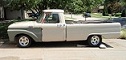
Re: i'm bored.
I agree with Brian,
6 with a cliffy and duals has a very cool sound, anybody can drop a 302 in about anything
Hot Rod 6 has a cool factor that the 302 can't even compete with
(I would run glasspacks myself Brian)
I originally wanted and still do a dual carbed 300-6, with a duals, and an AOD in my 64,
it has the roller 5.0 and T-5 because I already had them - cost effective
if you want a 302 in a truck I would suggest the roller 5.0 due to the fact is has more torque,
it would likely get better mileage than the lower torque 302 also
6 with a cliffy and duals has a very cool sound, anybody can drop a 302 in about anything
Hot Rod 6 has a cool factor that the 302 can't even compete with
(I would run glasspacks myself Brian)
I originally wanted and still do a dual carbed 300-6, with a duals, and an AOD in my 64,
it has the roller 5.0 and T-5 because I already had them - cost effective
if you want a 302 in a truck I would suggest the roller 5.0 due to the fact is has more torque,
it would likely get better mileage than the lower torque 302 also
1964 F 100 - I am going to do "something" with it.......
viewtopic.php?f=32&t=15942
1987 Mustang LX Convertible, 2.3 Auto - cruiser.
1994 F 150 XLT 2WD
~ Yes - I adopted another cat..............
Cam L Milan,
You'll be missed my friend.
viewtopic.php?f=32&t=15942
1987 Mustang LX Convertible, 2.3 Auto - cruiser.
1994 F 150 XLT 2WD
~ Yes - I adopted another cat..............
Cam L Milan,
You'll be missed my friend.

Re: i'm bored.
I didn't seen any one post the FordSix forum, might look there http://fordsix.com/. Lot's of good information there, much like here. My 65 has the 300 six and the only thing it needs is an overdrive.
In the end, it's your truck, but my 2 cents is keep it as close to stock as possible. It is easier to put the original exhaust and intake back on then pull the V8 and put the six back in.
Have Fun!
Marty
In the end, it's your truck, but my 2 cents is keep it as close to stock as possible. It is easier to put the original exhaust and intake back on then pull the V8 and put the six back in.
Have Fun!
Marty
Marty
MSGT - Retired Air Force
MSGT - Retired Air Force
Re: i'm bored.
I think you know what my vote is Chris! 
-
ICEMAN6166
- Posts: 11470
- Joined: July 11, 2006, 11:28 am
- Location: Dove Creek, Co. elevation 6842
Re: i'm bored.
Chris, this already has a 302 and its lowered in front, then you could leave the truck as is...
http://westslope.craigslist.org/cto/3305056230.html

http://westslope.craigslist.org/cto/3305056230.html
1966 F250 4x4
1964 Rambler Ambassador 990
Rest in peace departed Slick family members
Cam Milam
Lesley Ferguson
Steve Lopes
John Sutton
1964 Rambler Ambassador 990
Rest in peace departed Slick family members
Cam Milam
Lesley Ferguson
Steve Lopes
John Sutton
Re: i'm bored.
I LOVE that car!!!!!!!!!!!!
I would of course change a few things (would look more 50s when I got done).
There just isn't an ugly spot anywhere on a 52 Merc................
I would of course change a few things (would look more 50s when I got done).
There just isn't an ugly spot anywhere on a 52 Merc................
1964 F 100 - I am going to do "something" with it.......
viewtopic.php?f=32&t=15942
1987 Mustang LX Convertible, 2.3 Auto - cruiser.
1994 F 150 XLT 2WD
~ Yes - I adopted another cat..............
Cam L Milan,
You'll be missed my friend.
viewtopic.php?f=32&t=15942
1987 Mustang LX Convertible, 2.3 Auto - cruiser.
1994 F 150 XLT 2WD
~ Yes - I adopted another cat..............
Cam L Milan,
You'll be missed my friend.
Re: i'm bored.
dang that is a nice ride.
1965 SWB 460 C6 AUTO "Red Barron Red"
1965 SWB Going 302 w/C4 Auto (Matthew's)
1969 Dodge Charger "replica General Lee" 440 w/727 (Mine)
If you sent your Truck out to a restoration shop, you did NOT build it, jus sayin!
-
bruceandersson
- Posts: 906
- Joined: August 12, 2009, 9:44 am
- Location: Ohio
Re: i'm bored.
I added the clifford and headers to my 65, then replaced the headers with ceramic coated ones and got a gear reduced starter to avoid the heat issues with the starter and headers. The new starter provided more clearance. The original headers heated the starter to a level where it would have to cool off to work after a drive. Other than that happy with the setup.
Re: i'm bored.
From the craigslist ad:ICEMAN6166 wrote:Chris, this already has a 302 and its lowered in front, then you could leave the truck as is...
http://westslope.craigslist.org/cto/3305056230.html
???? "...., with 62-63 Mercury 302 cu in engine,..."
I never knew Ford made a 302 in '62 or '63......????

BarnieTrk
Re: i'm bored.
i thought 67 was first year for 302cu!
1965 SWB 460 C6 AUTO "Red Barron Red"
1965 SWB Going 302 w/C4 Auto (Matthew's)
1969 Dodge Charger "replica General Lee" 440 w/727 (Mine)
If you sent your Truck out to a restoration shop, you did NOT build it, jus sayin!
-
ICEMAN6166
- Posts: 11470
- Joined: July 11, 2006, 11:28 am
- Location: Dove Creek, Co. elevation 6842
Re: i'm bored.
it was and that appears to be what is in the merc.
there was a 302 truck engine back then, in heavy duty trucks but does not look anything like nor was it a small block.
62/63 small block v8 would have been 221/260 .i think the 289 came out in 64?
there was a 302 truck engine back then, in heavy duty trucks but does not look anything like nor was it a small block.
62/63 small block v8 would have been 221/260 .i think the 289 came out in 64?
1966 F250 4x4
1964 Rambler Ambassador 990
Rest in peace departed Slick family members
Cam Milam
Lesley Ferguson
Steve Lopes
John Sutton
1964 Rambler Ambassador 990
Rest in peace departed Slick family members
Cam Milam
Lesley Ferguson
Steve Lopes
John Sutton
Re: i'm bored.
Introduced with the 221 in 1962 for the Fairlane, this small block is Ford's first modern lightweight engine. The next was the 429 Big Block. Interestingly, 221 cubic inches was also the displacement of the very first Ford Flathead V-8, built in 1932.
A very compact design, the small block engine utilizes a thin-wall block casting not extended below the crankshaft centerline. Expanded to include the 260, 289, and 302, the engine family has provided power for most of Fords model lineup. Cylinder bore spacing is 4.38", the same as the Cleveland family. The small block is externally one of the smallest V-8 engines made, and total engine weight is around 460 lbs. The 289 was produced from 1963 to 1968.
In 1963 Ford released the 289 High Performance
which produced 271 BHP @ 6000 RPM.
The 289 HP features a high nodularity cast iron crankshaft, Brinell hardness tested to ensure quality. To prevent 4th order harmonic vibrations from destroying the crankshaft at higher RPM, a special vibration damper was used with an add-on counterweight within the timing cover. Somewhat stronger connecting rods with 3/8" bolts, thicker main bearing caps, solid lifter cam, screw-in rocker arm studs, machined valve spring seats, forged steel exhaust valves, a dual point mechanical advance distributor, and better flowing exhaust manifolds round out the package. Those fitted to Shebly GT 350 cars rated at 306 HP also featured a high rise aluminum intake manifold and Tri-Y headers.
In 1968, the 289 was stroked 1/8" to form the 302. Block deck height and piston compression height remained the same. Shorter connecting rods made up the difference in the stroke.
Some 302 blocks cast in Mexico have thicker, 289 HP style bearing caps. These were supposedly made with a higher nickel content alloy. Folklore claims these to be beefier than other blocks. On my bathroom scale a 1970 dated Mexican block weighed within 1/2 a pound of a regular 1970 302 block. That must be some lean beef.
Identified by casting numbers C8AM-B, 75ZY-AA, D1ZM-AA, among others, these blocks may be spotted by the "Hecho En Mexico" cast in the lifter valley. An extra unmachined boss protruding from the front of the driver's side cylinder bank can be easily spotted at the junkyard.
Small block reciprocating assemblies have some balance. The compact lightweight crankshaft itself does not carry enough counterweights to achieve zero balance. Extra counterweighting is cast into the flywheel and harmonic balancer bring the entire assembly into neutral balance. Early engines use 28.2 oz.-in. external balance, while 1982 and later engines use 50 oz.-in. flywheel and 34 oz.-in. damper external balance. All 351W engines use the early style 28.2 oz.-in. external balance.
Five different rocker arm alignment schemes have been used on small block engines.
289 engines built before mid-1966 and all 289 HiPer engines use a conventional stud mounted rocker arm. The rocker arm is held in alignment with the valve stem by a close tolerance pushrod slot machined into the cylinder head. These engines use hardened pushrods. This scheme is fully adjustable and may be used successfully with mechanical cams.
--------------------------------------------------------------------------------
Rail-type rocker arm with loose fit pushrod hole
289 engines built after mid-1966 and 302 engines use a rail-type rocker arm. These rocker arms have ears that extend downward, forming a rail or channel over the valve stem. This rail maintains proper alignment. The pushrod passes through a loose tolerance hole in the cylinder head, resulting in a cheaper assembly.
At high RPM, however, these rockers can jump the track, loosing alignment with the valve stem and resulting in potentially serious engine damage. These engines do not require hardened pushrods. This scheme was fully adjustable until 1970 when the studs were changed to incorporate a positive stop. The rocker arm nut is no longer used to adjust the valve clearance. Rather it is simply tightened down. Longer or shorter pushrods are selected to adjust the clearance. Since these are non-adjustable they can not be used with mechanical cams.
--------------------------------------------------------------------------------
Rocker arm with screw-in stud and pushrod guide plate
Most high performance applications will not work with rail type rockers. High valve spring loads and high RPM operation can pull the pressed-in rocker studs right out of the cylinder head. Some people have used roll-pins to hold the studs securely in the heads, but the best solution is to modify the heads to use screw-in rocker studs and stamped steel pushrod guide plates.
A very compact design, the small block engine utilizes a thin-wall block casting not extended below the crankshaft centerline. Expanded to include the 260, 289, and 302, the engine family has provided power for most of Fords model lineup. Cylinder bore spacing is 4.38", the same as the Cleveland family. The small block is externally one of the smallest V-8 engines made, and total engine weight is around 460 lbs. The 289 was produced from 1963 to 1968.
In 1963 Ford released the 289 High Performance
which produced 271 BHP @ 6000 RPM.
The 289 HP features a high nodularity cast iron crankshaft, Brinell hardness tested to ensure quality. To prevent 4th order harmonic vibrations from destroying the crankshaft at higher RPM, a special vibration damper was used with an add-on counterweight within the timing cover. Somewhat stronger connecting rods with 3/8" bolts, thicker main bearing caps, solid lifter cam, screw-in rocker arm studs, machined valve spring seats, forged steel exhaust valves, a dual point mechanical advance distributor, and better flowing exhaust manifolds round out the package. Those fitted to Shebly GT 350 cars rated at 306 HP also featured a high rise aluminum intake manifold and Tri-Y headers.
In 1968, the 289 was stroked 1/8" to form the 302. Block deck height and piston compression height remained the same. Shorter connecting rods made up the difference in the stroke.
Some 302 blocks cast in Mexico have thicker, 289 HP style bearing caps. These were supposedly made with a higher nickel content alloy. Folklore claims these to be beefier than other blocks. On my bathroom scale a 1970 dated Mexican block weighed within 1/2 a pound of a regular 1970 302 block. That must be some lean beef.
Identified by casting numbers C8AM-B, 75ZY-AA, D1ZM-AA, among others, these blocks may be spotted by the "Hecho En Mexico" cast in the lifter valley. An extra unmachined boss protruding from the front of the driver's side cylinder bank can be easily spotted at the junkyard.
Small block reciprocating assemblies have some balance. The compact lightweight crankshaft itself does not carry enough counterweights to achieve zero balance. Extra counterweighting is cast into the flywheel and harmonic balancer bring the entire assembly into neutral balance. Early engines use 28.2 oz.-in. external balance, while 1982 and later engines use 50 oz.-in. flywheel and 34 oz.-in. damper external balance. All 351W engines use the early style 28.2 oz.-in. external balance.
Five different rocker arm alignment schemes have been used on small block engines.
289 engines built before mid-1966 and all 289 HiPer engines use a conventional stud mounted rocker arm. The rocker arm is held in alignment with the valve stem by a close tolerance pushrod slot machined into the cylinder head. These engines use hardened pushrods. This scheme is fully adjustable and may be used successfully with mechanical cams.
--------------------------------------------------------------------------------
Rail-type rocker arm with loose fit pushrod hole
289 engines built after mid-1966 and 302 engines use a rail-type rocker arm. These rocker arms have ears that extend downward, forming a rail or channel over the valve stem. This rail maintains proper alignment. The pushrod passes through a loose tolerance hole in the cylinder head, resulting in a cheaper assembly.
At high RPM, however, these rockers can jump the track, loosing alignment with the valve stem and resulting in potentially serious engine damage. These engines do not require hardened pushrods. This scheme was fully adjustable until 1970 when the studs were changed to incorporate a positive stop. The rocker arm nut is no longer used to adjust the valve clearance. Rather it is simply tightened down. Longer or shorter pushrods are selected to adjust the clearance. Since these are non-adjustable they can not be used with mechanical cams.
--------------------------------------------------------------------------------
Rocker arm with screw-in stud and pushrod guide plate
Most high performance applications will not work with rail type rockers. High valve spring loads and high RPM operation can pull the pressed-in rocker studs right out of the cylinder head. Some people have used roll-pins to hold the studs securely in the heads, but the best solution is to modify the heads to use screw-in rocker studs and stamped steel pushrod guide plates.
1965 SWB 460 C6 AUTO "Red Barron Red"
1965 SWB Going 302 w/C4 Auto (Matthew's)
1969 Dodge Charger "replica General Lee" 440 w/727 (Mine)
If you sent your Truck out to a restoration shop, you did NOT build it, jus sayin!
-
Johnny Canuck

- Posts: 8291
- Joined: April 9, 2006, 11:14 pm
- Location: Edmonton, Alberta.

Re: i'm bored.
You are just trying to give me a seizure, right ?

It's a race.. Will hell freeze over or will JC finish his truck first. Stay tuned..