

Hey guys, I have an air compressor. It's a 110V 33 gallon 2 hp unit. It has a max pressure of 140psi and is rated at 8.6 scfm @ 40 psi and 6.4 scfm @90 psi.
Basically, what does the scfm rating mean?
The compressor works great for all my air tools but I am looking to attempt body work/paint in the near future and am wondering if it will cut it. I have been toying with the idea of adding an extra 30-40 gallon tank to increase the capacity. I know it won't help with the fill rate but will give me increased working time between fills. Will extra capacity increase my cfm??
I have been looking into air guns for primer and then the base/clear application for the unibody. Most of the spray guns need something around 8.5-12 cfm but at a lower psi (approx 15-25 psi). The scfm ratings seem to increase as pressure decreases. What does that mean for an even lower psi?
I know this is loosely related to slicks but I have asked this same question in a few of the auto body forums with little to no responces. You all have always given me great info/advice so I thought I'd try it here.
In a nutshell I just need an explanation of how all this jazz works so I can get a spray gun that will work well
air compressor/cfm basics

SCFM = Standard Cubic Feet per Minute which is the volume of air that the compressor will produce at the specific pressures. The SCFM will increase at lower pressure, due to the compressibility of air. Increasing the volume of your tank will not change the SCFM of your system, but as you said, will give you more capacity so you can work longer, but it will also increase the fill time.
Your compressor sounds large enough to handle the spray equipment you are talking about, but make sure that you have a good dryer and filter in that line, these will also restrict some of your airflow, therefore needing a higher SCFM than that listed for your spray gun.
If you were to increase the volume with the 30 or 40 gallon tank, you should have plenty of air to continiously paint for a good period of time. If you are looking at the expense of increasing the capacity, consider upgrading to a larger compressor.
I am not a painter and there may be experienced painters would contradict me, the best people to ask are the ones that use it regularily.
Your compressor sounds large enough to handle the spray equipment you are talking about, but make sure that you have a good dryer and filter in that line, these will also restrict some of your airflow, therefore needing a higher SCFM than that listed for your spray gun.
If you were to increase the volume with the 30 or 40 gallon tank, you should have plenty of air to continiously paint for a good period of time. If you are looking at the expense of increasing the capacity, consider upgrading to a larger compressor.
I am not a painter and there may be experienced painters would contradict me, the best people to ask are the ones that use it regularily.
61 Mercury SWB Uni - Project
62 Mercury SWB BBW - Race truck
63 Ford SWB Uni - Daily driver (Jinx)
63 Ford SWB Uni - Parts truck
62 Mercury SWB BBW - Race truck
63 Ford SWB Uni - Daily driver (Jinx)
63 Ford SWB Uni - Parts truck


On the Speed Channel or Spike, the show Trucks recommended 60 gallon tank, 5-7 hp, and 10-14 cfm... If you cant get that, make sure you match the volume and cfm of the paint gun as closely as you can with your compressor rating. As far as air tools go... your compressor would need to buid up during long periods of use.
To the best of my knowledge... I hope this helps.
To the best of my knowledge... I hope this helps.
'61 Uni SWB BBW Custom Cab 302 T-5 w/ Power brakes
It ain't pretty either!

It ain't pretty either!
-
Hoofbeat Racer

- Posts: 1782
- Joined: July 6, 2006, 12:22 am
- Location: Rocky Mountains, Alberta

As Dean said, SCFM Standard Cubic Feet per Minute is output rate of the compressor at a certain pressure. Volume of what comes out the regulator will be based on your demand of your air tool.
Example - if your compressor is good for 12 cfm at 90 psi and your air tool requirement is 6 cfm @ 90 psi, your compressor will be able to keep up and actually shut off for a small amount of time. If your air tool required 15 cfm @ 90 psi your compressor would be running continuously and probably only put out around 50-60 psi just guessing.
Hope that helps
Example - if your compressor is good for 12 cfm at 90 psi and your air tool requirement is 6 cfm @ 90 psi, your compressor will be able to keep up and actually shut off for a small amount of time. If your air tool required 15 cfm @ 90 psi your compressor would be running continuously and probably only put out around 50-60 psi just guessing.
Hope that helps
Mark

OK I think I get it but just so I am clear. Hypothetically, if I my compressor was rated 8.6 cfm at 40 psi and I had a spray gun that needed 9 cfm at approx 25 psi theres no reason I couldn't use the gun.
Granted I could only use it as long as I never went below the operating pressure of the gun and I allowed the compressor to fill up before proceeding if I did. I know it would be slow going but it would work right?
And if I added a bit of extra capacity (a reserve tank) and had a good water seperator/dryer I should be ok I think.
I love my little compressor for it's mobility and it powers all my air tools just fine. I would love to avoid buying a new compressor. This is my first attempt at body work/paint and I will probably do it very infrequently so I don't mind waiting for the compressor.
Thanks a million guys. Please feel free to pop my bubble if I'm wrong but I think it might just work if I find a decent gun that uses low cfm
Granted I could only use it as long as I never went below the operating pressure of the gun and I allowed the compressor to fill up before proceeding if I did. I know it would be slow going but it would work right?
And if I added a bit of extra capacity (a reserve tank) and had a good water seperator/dryer I should be ok I think.
I love my little compressor for it's mobility and it powers all my air tools just fine. I would love to avoid buying a new compressor. This is my first attempt at body work/paint and I will probably do it very infrequently so I don't mind waiting for the compressor.
Thanks a million guys. Please feel free to pop my bubble if I'm wrong but I think it might just work if I find a decent gun that uses low cfm
-
PFM-64f100
- Posts: 1270
- Joined: August 7, 2006, 6:37 pm
- Location: Haslet, Texas
- Contact:
I have painted stuff with the little compressor I had once upon a time (it was about what you have). Everything worked but the compressor would run for ever and not shut off. I took breaks to let it cool down because it would take longer if I poped the thermal breaker. I must say having more air than I need these days with my 2 stage 220 compressor is a heck of a lot nicer.
Long story short you should be able to do what you want just may take a little time, but upgrading would be the best. You might end up buring out the compressor before your done. Have fun
Long story short you should be able to do what you want just may take a little time, but upgrading would be the best. You might end up buring out the compressor before your done. Have fun
64 F100 short bed-style side-460-c6-with side toolbox and Dakota Front Suspension
And a 65 CrewCab
Chris W.
The pickups
65 Crew Cab
http://www.purpleflyingmonkey.com/CrewCab/index.html
64 F100
http://www.purpleflyingmonkey.com/1964- ... index.html
The Torino project http://www.purpleflyingmonkey.com/1971- ... eFile.html
And a 65 CrewCab
Chris W.
The pickups
65 Crew Cab
http://www.purpleflyingmonkey.com/CrewCab/index.html
64 F100
http://www.purpleflyingmonkey.com/1964- ... index.html
The Torino project http://www.purpleflyingmonkey.com/1971- ... eFile.html

I've done a lot of body work with a small compressor like that and PFM-64f100 is right give it a lot of breaks. I also found if you set a fan to blow on the compressor that will also help. I used mine for about 20 years before I got a more appropriate unit. Orbital sanders and cut off wheels will put the most stress on a unit. As was said before agood dryer and filter are a real good idea. the extra tank will help also. Just my two cents worth.
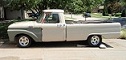
The reasons listed by PFM & others are why I bought this. I could have gotten a smaller compressor but didn't want to risk damaging doing the bodywork. It also just doesn't pay to try to go cheap when doing body & paint. Look at it this way, I have probably $2000 in recent purchases of body tools and I was pretty well stocked before that. It will probably cost me another $500 - $700 in materials to finish it too. If I just drop the truck off, say "do it this way" and write a check when it's done it'll cost me at least 8-10 times that. Also this way I KNOW what is under the paint.
[albumimg]3879[/albumimg]
[albumimg]3879[/albumimg]
Last edited by Greg D on September 6, 2008, 9:23 am, edited 1 time in total.
1964 F 100 - I am going to do "something" with it.......
viewtopic.php?f=32&t=15942
1987 Mustang LX Convertible, 2.3 Auto - cruiser.
1994 F 150 XLT 2WD
~ Yes - I adopted another cat..............
Cam L Milan,
You'll be missed my friend.
viewtopic.php?f=32&t=15942
1987 Mustang LX Convertible, 2.3 Auto - cruiser.
1994 F 150 XLT 2WD
~ Yes - I adopted another cat..............
Cam L Milan,
You'll be missed my friend.

compressor
What Chris said about size really is a plus. I have a 3 hp 30 gallon tank compressor in my garage I've been using for 30+ years. Yeah, I need a bigger one, and one day I will get one. Mine has painted a lot of cars and powered all my air tools over the years, and is about worn out. I would suggest that when you buy a paint gun to get an HVLP. High Volumn Low Pressure. You can spray at lower pressures than the older style siphon fed guns, and get a gravity feed HVLP with the cup on the top instead of a siphon fed gun. I have been a painter for a long time and when I used a gravity fed gun for the first time I was hooked.
I still use both, but like the gravity guns a lot better. As far as painting a vehicle, I have a suggestion you may not have heard about, but is a really neat setup when painting something large, like a slick. 2 quart pressure pot with your siphon fed gun attached via hoses for paint and air. I use them at work to paint large objects such as flight controls and flaps for aircraft. I set them up at about 10 psi on the pressure control to the pot, and then adjust my air down fairly low for a nice fan. Cool thing here is you have a half gallon of paint in the pot and can turn the gun in any position you need to spray an object. You won't over tax your compressor and the 2 quart pressure pots aren't an expensive tool.
Cleaning them is a breeze with laquer thinner or enamel solvent and a few rags. Painting frames is a lot easier with a setup like this so you can spray all those little hard to reach areas. I also use touchup guns on a 2 quart rig with great success. You can get up to a 12-14 inch wide fan out of them. The bottom line here is the capacity. Ever be laying a coat of paint on a vehicle and get almost all the way around it with maybe 2 feet of it left to go and run out of paint? This sucks! You go back and mix another batch and when you get back to your wet edge to finish the coat, it isn't wet anymore and now you have a big 2 foot dry spot. Been there, done that when I first started painting cars. Just thought I'd throw that in so it won't happen to anyone else. You can probably do all your painting with a 1 quart cup gun, and get along fine, but I just wanted to let you know about an alternative way to do it that I have used for many years as a production painter that works really well. Good luck to you on you painting, and adding the extra tank will give you more volumn, but not more scfm. TR
I still use both, but like the gravity guns a lot better. As far as painting a vehicle, I have a suggestion you may not have heard about, but is a really neat setup when painting something large, like a slick. 2 quart pressure pot with your siphon fed gun attached via hoses for paint and air. I use them at work to paint large objects such as flight controls and flaps for aircraft. I set them up at about 10 psi on the pressure control to the pot, and then adjust my air down fairly low for a nice fan. Cool thing here is you have a half gallon of paint in the pot and can turn the gun in any position you need to spray an object. You won't over tax your compressor and the 2 quart pressure pots aren't an expensive tool.
Cleaning them is a breeze with laquer thinner or enamel solvent and a few rags. Painting frames is a lot easier with a setup like this so you can spray all those little hard to reach areas. I also use touchup guns on a 2 quart rig with great success. You can get up to a 12-14 inch wide fan out of them. The bottom line here is the capacity. Ever be laying a coat of paint on a vehicle and get almost all the way around it with maybe 2 feet of it left to go and run out of paint? This sucks! You go back and mix another batch and when you get back to your wet edge to finish the coat, it isn't wet anymore and now you have a big 2 foot dry spot. Been there, done that when I first started painting cars. Just thought I'd throw that in so it won't happen to anyone else. You can probably do all your painting with a 1 quart cup gun, and get along fine, but I just wanted to let you know about an alternative way to do it that I have used for many years as a production painter that works really well. Good luck to you on you painting, and adding the extra tank will give you more volumn, but not more scfm. TR
Truckrat,
I have seen those pressure pots but never really gave them a second thought. Now I will. I have also been advised that a LVLP might be a good way to go because of the low air demand. Any advise?
I have only seen those pressure pots for conventional type guns. Are they available for HVLP, LVLP and RP models?
Thanks again
I have seen those pressure pots but never really gave them a second thought. Now I will. I have also been advised that a LVLP might be a good way to go because of the low air demand. Any advise?
I have only seen those pressure pots for conventional type guns. Are they available for HVLP, LVLP and RP models?
Thanks again
The HVLP gun will likely be your best bet.
1964 F 100 - I am going to do "something" with it.......
viewtopic.php?f=32&t=15942
1987 Mustang LX Convertible, 2.3 Auto - cruiser.
1994 F 150 XLT 2WD
~ Yes - I adopted another cat..............
Cam L Milan,
You'll be missed my friend.
viewtopic.php?f=32&t=15942
1987 Mustang LX Convertible, 2.3 Auto - cruiser.
1994 F 150 XLT 2WD
~ Yes - I adopted another cat..............
Cam L Milan,
You'll be missed my friend.
I would caution against trying to set up a secondary tank. You wll create quite a bit of work for yourself, for a very minimal gain. You'll have to remember to drain two tanks instead of one and the two will take up a lot more space than one larger one.
If you have a spare tank even in the 30 - 40 gallon range and the tank is good, then consider just putting a new two stage compressor on that tank.
Tank size is over rated -- if you are overwhelming the pump spraying or blasting, you will burn through 80 gallons just about as fast as 40.
I debated long and hard as well about what to go with -- ended up with a Lowe's Kobalt 60 gal single stage. Rated at 12 cfm at 90 psi I think, but I think that's streching it. It was priced right at the time, and they have a decent warranty. Unfortunately, I have HAD to use the warranty -- the unloader valve failed about 6 months into it. The sent me out a new one which was a minor hassle to install, but at least they did seem to have competent people at the end of the telephone line.
It will NOT keep up with a pressure tank sand blaster, but it does fine for tools and my siphon fed blast cabinet. I'm sure it would be OK for painting as well.
It cost $450 and I noticed that home depot has a similar Husky compressor for $399.
Two stage units are $800 and up. I looked hard at a Milwaukee 80 gal 2 stage that could be had for about $900, but in the end, I could not justify the extra $450 just for the occassional sand blasting.....
If you have a spare tank even in the 30 - 40 gallon range and the tank is good, then consider just putting a new two stage compressor on that tank.
Tank size is over rated -- if you are overwhelming the pump spraying or blasting, you will burn through 80 gallons just about as fast as 40.
I debated long and hard as well about what to go with -- ended up with a Lowe's Kobalt 60 gal single stage. Rated at 12 cfm at 90 psi I think, but I think that's streching it. It was priced right at the time, and they have a decent warranty. Unfortunately, I have HAD to use the warranty -- the unloader valve failed about 6 months into it. The sent me out a new one which was a minor hassle to install, but at least they did seem to have competent people at the end of the telephone line.
It will NOT keep up with a pressure tank sand blaster, but it does fine for tools and my siphon fed blast cabinet. I'm sure it would be OK for painting as well.
It cost $450 and I noticed that home depot has a similar Husky compressor for $399.
Two stage units are $800 and up. I looked hard at a Milwaukee 80 gal 2 stage that could be had for about $900, but in the end, I could not justify the extra $450 just for the occassional sand blasting.....
1965 F-100 240 Autolite 1101, Disk brake dual master upgraded, swapped over to C4 and powersteering. Bought by my Dad new in March 65'

Planned/considered upgrades:
Perhaps power brakes, 300 I6 motor and JUST maybe, AC!
Planned/considered upgrades:
Perhaps power brakes, 300 I6 motor and JUST maybe, AC!
compressor
The HVLP guns are better to use than the old siphon fed conventional guns, but I still use an old Binks 7. I just feel comfortable with it. My choice is the gravity fed guns and they do make them in HVLP, (High Volumn Low Pressure) which would work out well for you. You can use about any siphon feed gun with a pressue pot, including touch up guns, and with the pot set at 10psi all you have to do is adjust your air pressure at the gun. Be sure to put a little valve with a knob on your gun between the gun and your air hose so you can adjust the air pressure at the gun. Then you can play around with your fan setting according to what you are spraying. To much air pressure will cause your paint to go on dry, and too little air will cause it to splatter. Practice on an old hood or whatever you have laying around your shop until you feel comfortable with it. A rule of thumb I use is keep the air pressure turned down for less overspray and more coverage. Paint is expensive, so why blow it all over everything. Start with one or two light coats just for minimal coverage, follow up with a medium coat, and gloss it out on the last coat. That is if you are spraying single stage paint. Let the paint "flash" between coats enough so you can touch the masking tape and the paint won't stick to your finger. On two stage paint jobs (base coat, clear coat) the same applies. You just won't get a gloss out of it until you apply the clear, so do it in several coats flashing out between coats.
If you do get a 2 quart pressure pot, PM me and I'll help you set it up. I use these all the time at work and they really make life easy painting large objects or working around parts with a lot of hard to reach places,
like it would be inside a cab, or a frame of a truck. TR
If you do get a 2 quart pressure pot, PM me and I'll help you set it up. I use these all the time at work and they really make life easy painting large objects or working around parts with a lot of hard to reach places,
like it would be inside a cab, or a frame of a truck. TR
Here is a website of a company that builds air compressors and tools. One aspect to keep in mind when using a compressor is the duty cycle. Much the same as the welder machines. 10% duty cycle means 10% of one hour. This is usually why 'big box' store compressors fail after a few years--overuse.
http://www.atlascopco.us/usus/
http://www.atlascopco.us/usus/
Snakes work best when they're a suprise.