

Just want an opinion here. Getting the 65 out of storage. I always give it a fresh oil change right away. Would it be better to drain the oil before even starting it for the season so all the old oil has already run down to the pan, or better to start it up get everything warmed up, then drain.
Probably not a big deal either way, but just wondering.
Oil change opinion
Oil change opinion
Old trucks - old cars - old tractors - old music... keep you young
'65 F100/'63 Ford Falcon convert/'57 Ford 640
'65 F100/'63 Ford Falcon convert/'57 Ford 640


As long as you have adequate oil in the truck and the purpose is to change out the old stuff, I'd personally heat it up good and then drain it. Otherwise you'll have more of the old oil left inside.
"If you don't want to stand behind our Troops, feel free to stand in front of them."
1964 Ford F100
1967 US Army M416
1964 Ford F100
1967 US Army M416
64 f100 wrote:I would be more concerned with the old gas. Todays gas does not store like the old stuff did. The old stuff didn't store all that great, but this new stuff should be drained out before storage and the carb ran dry. It will cause corrosion in the tank.
Rich
 with Rich.
 Regarding changing the motor oil, I'd suggest you switch your practice just a bit and change the motor oil & filter just BEFORE putting it up for winter storage. That way you get the old crud out of there. If there is any build up of acids (eating on anything aluminum), condensates (water will rust stuff inside an engine), or crud/sediment (that can turn to mud or hard crud in the bottom of the pan). By draining it before storage, these issues are moot...as they are all drained out so as not to sit in your engine for months... Just my
 .
.BarnieTrk

-
charliemccraney
- Posts: 1743
- Joined: July 9, 2008, 10:02 pm
- Location: Lawrenceville, GA
I have to disagree. After months of storage, what can drain to the pan has drained to the pan. Starting it up and getting it warm will only thoroughly redistribute the old oil. With the general 3 month or 3000 mile oil change rule, I'd rather start it for the first time with fresh oil.Max wrote:As long as you have adequate oil in the truck and the purpose is to change out the old stuff, I'd personally heat it up good and then drain it. Otherwise you'll have more of the old oil left inside.
Lawrenceville, Ga
1961 F100 Unibody
318 Y-block (292 +.070 bore, +.170 stroke), FMS T5-Z w/Mustang 10.5" diaphragm clutch.
1961 F100 Unibody
318 Y-block (292 +.070 bore, +.170 stroke), FMS T5-Z w/Mustang 10.5" diaphragm clutch.

I agree, drain the oil before starting it but I have to say that the 3 month 3000 mile thing is a huge waste of money and has nothing to do with reality. You should do some research and you will find that the oil companies and repair shops that profit from regular oil changes recomend this, not the auto manufacturers or the SAE, it is just a myth that the less educated are hung up on. The recomendation to change oil at 3K miles is related to old oils that were not formulated like modern oils and the oil industry has simply fostered the belief that you should change oil that often simply to improve profits, those 3K mile changes will not extend the life of your engine for well 90% of the population. It has nothing to do with engine wear or extending engine life, it is just a profit making tool for the industry. Changing oil every 3K miles is the same as letting your stock broker change your investments all the time. You spend money on fees and never get any return! Hawkrod
http://genxfinance.com/2007/05/29/dont- ... necessary/
http://articles.sfgate.com/2008-02-10/b ... ar-engines
http://www.consumerismcommentary.com/20 ... 000-miles/
http://blogs.insideline.com/straightlin ... thers.html
http://cars.cartalk.com/content/advice/oilchanges.html
http://www.getrichslowly.org/blog/2006/ ... ge-a-scam/
http://www.cnn.com/2008/LIVING/wayoflif ... index.html
http://www.moneybluebook.com/the-3000-m ... our-money/
http://www.triumphspitfire.com/Oiltest.html
http://genxfinance.com/2007/05/29/dont- ... necessary/
http://articles.sfgate.com/2008-02-10/b ... ar-engines
http://www.consumerismcommentary.com/20 ... 000-miles/
http://blogs.insideline.com/straightlin ... thers.html
http://cars.cartalk.com/content/advice/oilchanges.html
http://www.getrichslowly.org/blog/2006/ ... ge-a-scam/
http://www.cnn.com/2008/LIVING/wayoflif ... index.html
http://www.moneybluebook.com/the-3000-m ... our-money/
http://www.triumphspitfire.com/Oiltest.html
-
charliemccraney
- Posts: 1743
- Joined: July 9, 2008, 10:02 pm
- Location: Lawrenceville, GA
Those are interesting links. However, most of the articles stress the longer frequencies with modern oils AND modern engines which run tighter clearances and at higher temperatures. Without a doubt, most of us are using modern oils but how many of us are using modern engines? How is the frequency affected with the combination of modern oils AND old engines?
Lawrenceville, Ga
1961 F100 Unibody
318 Y-block (292 +.070 bore, +.170 stroke), FMS T5-Z w/Mustang 10.5" diaphragm clutch.
1961 F100 Unibody
318 Y-block (292 +.070 bore, +.170 stroke), FMS T5-Z w/Mustang 10.5" diaphragm clutch.
The industry consensus is there is not much of a difference. The modern engines run hotter and thus burn off contaminents but the modern engines run hotter and burn off additives and contaminate the oil. Also, older engines have larger tolerances that allow thicker films and thus lower oil operating temperatures which extends the oils life. That is why the consumer resports study was so important, they used old cars (mostly Checkers although there were also newer Crown Vics and Caprices) and their results showed no issues with a 10K mile change compared to a 3K mile change over a lot of miles and severe duty. Hawkrodcharliemccraney wrote:Those are interesting links. However, most of the articles stress the longer frequencies with modern oils AND modern engines which run tighter clearances and at higher temperatures. Without a doubt, most of us are using modern oils but how many of us are using modern engines? How is the frequency affected with the combination of modern oils AND old engines?
Hawkrod,
Although, you and the sources you sited are correct about modern oils and their lifetimes. I still cling to the old adage that oil and filters are cheaper than engines and labor. Just my
Although, you and the sources you sited are correct about modern oils and their lifetimes. I still cling to the old adage that oil and filters are cheaper than engines and labor. Just my
As my dad used to say, somewhere there was a horse that died a painful death from terminal constipation due to missing a key part of its anatomy.
I don't disagree but what is the point? Changing filters or oil more often than you need to does not protect anything any better, it is just wasting resources. Very few engines actually fail due to mechanical wear caused by dirty oil. The number is so small that on the industry charts dirty oil is listed as being the cause of 0% of the failures. I doubt the number is actually zero but the percentage is so low it is not listed as a cause. This was not true 40-50 years ago when wear caused by dirty or degraded oil was probably a significant amount (can't find any SAE paperwork on those). hawkrodObsa wrote:Hawkrod,
Although, you and the sources you sited are correct about modern oils and their lifetimes. I still cling to the old adage that oil and filters are cheaper than engines and labor. Just my
Ya'll do what you want. I'd fire up that ol' boiler and let 'er pee! Especially up in frigid Minnesota. It all depends on how old the stuff is to begin with. What is distributed in the pan will drain back to the pan and flow out better when it's warm.
And I agree with the 3 month/3000 mile statement during normal driving conditions. Modern oil can withstand a lot more than that.
And I agree with the 3 month/3000 mile statement during normal driving conditions. Modern oil can withstand a lot more than that.
"If you don't want to stand behind our Troops, feel free to stand in front of them."
1964 Ford F100
1967 US Army M416
1964 Ford F100
1967 US Army M416
Hawkrod wrote:I don't disagree but what is the point? Changing filters or oil more often than you need to does not protect anything any better, it is just wasting resources. Very few engines actually fail due to mechanical wear caused by dirty oil. The number is so small that on the industry charts dirty oil is listed as being the cause of 0% of the failures. I doubt the number is actually zero but the percentage is so low it is not listed as a cause. This was not true 40-50 years ago when wear caused by dirty or degraded oil was probably a significant amount (can't find any SAE paperwork on those). hawkrodObsa wrote:Hawkrod,
Although, you and the sources you sited are correct about modern oils and their lifetimes. I still cling to the old adage that oil and filters are cheaper than engines and labor. Just my
I'm in agreement with ya both; with Obsa, regarding the cost comparisons, and with the point of "but why" made by Hawkrod. 
Let me point out a few other thoughts to consider on this subject.
I think it's just like alot of stuff - oil change frequency is still also effected by your particular situation and usage. I suspect that most of our old Slicks 'see' much less dust, dirt and grime or even just plain work conditions now than they would have in the 60's/'70's. We, as the current owners likely pay closer attention to the level of oil, the frequency of changing the oil and filter or even just noticing any oil leaks than many of the original buyers of our Slicks. Attention is what keeps them going.....
I remember back in the day, my dad did not check the oil level regularly in his work truck. Only when he would notice that the camshaft lifters were rattling, he might check the oil level, but chances were better that he'd simply just add a quart of oil and close the hood again. I think my dad changed the oil filter about once every two YEARS! He still operates that way and yet he still gets amazing life from his equipment.
 Eventhough I think he could give his equipment better attention & care, it seems to be good enough for the most part.
 That is probably why I smile every time I hear someone ask, "What oil should I use?" because I personally don't believe engine longevity is a matter of what type or brand motor oil you use. I believe MOST engines probably die a horrible death due to the simple LACK OF MOTOR OIL, not by what the brand or type is used.
I believe that mileage isn't the only factor to consider when wondering when to change your motor oil. This is an exaggeration but to make my point - Say I change my truck's motor oil then park the truck inside an air-conditioned garage; then after 5 years I decide to fire it up and drive it again. The oil has 0 miles on it. Should I change the oil? I'd say yes. It has been exposed to the air, important ingredients/additives within the oil have been allowed to evaporate off and leave the engine thru the vents during the 5-yrs of storage. I'd want to change it before driving it. The same type of situation analysis should be done when considering real-world oil change frequency. How long has it been in there? What type of use has the vehicle seen? Has it been short trips or long trips? Mostly gravel roads or all pavement use? etc. etc.
I truly believe only when we stop paying attention to our equipment, does it slowly begin to die. Give some credit to your gut feelings - then do what you believe is best.

Just my
, BarnieTrk

-- '63 F-100, 2WD, 223", T-18 4spd; owned '74-'76
-- '65 F-250, 2WD, 240", 3spd; owned '76-'79
-- '94 Ranger XLT, 4-cyl, 5-spd; owned '97-'14, put on 309K miles. Sold it running.
-- '65 F-100, 2WD, 390", T-18 4spd; owned since '81. Still licensed & driven by me.
-- '65 F-250, 2WD, 390", 4spd/OD; owned since '08. Still licensed & driven by me.
-- '06 Ranger XLT, 4-cyl, 5-spd; owned since '13. Licensed and driven by me.
Join Date: July 11, 2007
-- '65 F-250, 2WD, 240", 3spd; owned '76-'79
-- '94 Ranger XLT, 4-cyl, 5-spd; owned '97-'14, put on 309K miles. Sold it running.
-- '65 F-100, 2WD, 390", T-18 4spd; owned since '81. Still licensed & driven by me.
-- '65 F-250, 2WD, 390", 4spd/OD; owned since '08. Still licensed & driven by me.
-- '06 Ranger XLT, 4-cyl, 5-spd; owned since '13. Licensed and driven by me.
Join Date: July 11, 2007
-
blackagatha
- Posts: 2582
- Joined: March 10, 2007, 12:49 am
- Location: Arizona
I think the idea of the additives "evaporating off" in 5 years with 0 miles on oil is not a valid concern.
Now, the oil may well have gone rancid or something, but I think the "evaporating additives" would do so in about the first 10 miles of driving the engine at operating temp.
I'm pretty sure there are no volatile additives. mineral and metal additives, yes....
I personally dont give much credit to age of oil. I go by miles and how nasty it looks.
I personally wouldnt run aggie MUCH past 3000, just because it gets to looking too gross. I've accidentally pushed her to 5000 or so a few times, but I don't like it.
Now if I had ins at a lab where they analyze oil quality and determine what is floating around in it, sure no problem, if they told me it was positively still good....
Now, the oil may well have gone rancid or something, but I think the "evaporating additives" would do so in about the first 10 miles of driving the engine at operating temp.
I'm pretty sure there are no volatile additives. mineral and metal additives, yes....
I personally dont give much credit to age of oil. I go by miles and how nasty it looks.
I personally wouldnt run aggie MUCH past 3000, just because it gets to looking too gross. I've accidentally pushed her to 5000 or so a few times, but I don't like it.
Now if I had ins at a lab where they analyze oil quality and determine what is floating around in it, sure no problem, if they told me it was positively still good....
'63 with 390 & lots of juice. But never enough. Always want more.
-
macgiobuin

- Posts: 703
- Joined: September 13, 2009, 4:41 pm
- Location: Chattanooga, TN
-
blackagatha
- Posts: 2582
- Joined: March 10, 2007, 12:49 am
- Location: Arizona
-
Alan Mclennan

- Posts: 9324
- Joined: October 14, 2006, 6:16 pm
- Location: In the shed... Cranebrook NSW

OK!, explain " long-life motor oil" 
Honey, If I say I`ll fix something I will, there`s no need to remind me every 6 months!!
66 f100 tabletop swb 351 Clevo C6 "Beryl"
Slick Stock 3 KCMO
Slick Stock 4 Altoona
Slick Stock 5 KCMO
Slick Stock 6 Altoona
Slick Stock 7 Salina KS
Slick Stock 8..............................
66 f100 tabletop swb 351 Clevo C6 "Beryl"
Slick Stock 3 KCMO
Slick Stock 4 Altoona
Slick Stock 5 KCMO
Slick Stock 6 Altoona
Slick Stock 7 Salina KS
Slick Stock 8..............................
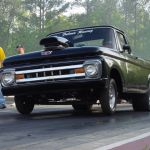
This is a little off the actual topic, but.....
Several years ago, I was a mechanic at a golf course. I was always changing the oil in various pieces of equipment, all requiring different weights and viscosities of oil. Like most people do in a hurry putting oil in, I would have probably a spoon full of oil left in the bottle or jug after it settled back down. This old man that worked there as a grass mower drove a short wheelbase bumpside. He would have me save all of my old oil bottles of different types and he drained each bottle into a bigger container until he had enough to change his oil in that ol' Ford. Others say he had been doing this since the truck was nearly new, and was still driving it in 2000 when I left there. He also stayed on top of every fluid level, and would grease the truck often.
I believe the long life of that truck's engine was due to the oil level never getting low, and not what kind of oil he put in it.
Several years ago, I was a mechanic at a golf course. I was always changing the oil in various pieces of equipment, all requiring different weights and viscosities of oil. Like most people do in a hurry putting oil in, I would have probably a spoon full of oil left in the bottle or jug after it settled back down. This old man that worked there as a grass mower drove a short wheelbase bumpside. He would have me save all of my old oil bottles of different types and he drained each bottle into a bigger container until he had enough to change his oil in that ol' Ford. Others say he had been doing this since the truck was nearly new, and was still driving it in 2000 when I left there. He also stayed on top of every fluid level, and would grease the truck often.
I believe the long life of that truck's engine was due to the oil level never getting low, and not what kind of oil he put in it.
61 f100 shortbed unibody