sombody explain how the 3 speed overdrive tranny works
-
65Truck_Nut
sombody explain how the 3 speed overdrive tranny works
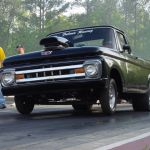
I just bought a 66 that i have known all my life kept charrished and well maintained by a man in my home town. We lost him to cancer this winter and i was honored to have the chance to buy this sweet truck. It has the 3 speed on the column with the overdrive tranny it free wheels when you let up on the accelerator and downshifts like a automatic when pulling hills. my question is how do i take it out of overdrive or can I?? I found a black push button on the left dash over the ignition switch but when i push it it makes a unhealthy low key grinding sound like a starter bendix kicking into a turning flywheel ring.What is that for and how is it supposed to be used???? well questions here ??? i really need to find out how to treat this tranny because this truck has been babied since 69 when the ol fella bought it and i want to continue the kind of love and care for the 66 heres a pic[albumimg]1731[/albumimg][albumimg]1732[/albumimg]
-
banjopicker66

- Posts: 1488
- Joined: July 17, 2006, 1:59 pm
- Location: Middlesboro, KY
FIRST SEE MY DANGER WARNING FURTHER DOWN!
If the overdrive (OD) tail housing has R-11 cast into it, it will hold up quite well. What it WON'T tolerate well, though, is goofing off, popping the clutch, etc. Originally, it came with a 2V carb, so I mention this reference the 4V. It is designed as a working man's way to save on gas, yet get decent performance. I had one in my '66, and I really liked it.
You have two electrical items on your trans: The upper one, on the passenger side, is the governor, and the lower one, on the driver's side is the actuation solenoid. You have a number of other items, so I'll describe them as well. This is, of course, a factory installation I am describing. If yours was transplanted, it may not be all there.
This is a Warner T-89N transmission. It is essentially a T-89 3 speed with an OD attached. It differs from the T-89 in that the T-89N has a few modifications for the OD extension to work.
1. Your governor closes the main circuit when your speed gets high enough, usually about 30 mph.
2. This activates a internally fused relay, which is on your firewall in the engine compartment above the main wiring harness port. The relay energizes the primary circuit in the solenoid.
3. When pressure is removed from the drivetrain by taking your foot off the gas momentarily, the solenoid drives home a pawl to lock in the OD sun and planetary gears. Once the pawl is in, an internal switch in the solenoid turns off the main circuit, and uses a less powerful circuit to hold the solenoid in. Thus the need for 2 wires. In other words, the way it works is this: Get up to about 30 mph, take your foot off the gas, listen/feel for the "clunk", and drive on at a lower rpm!
4. When the engine starts to bog down (because in high gear, a heavy load going uphill for example), your increasing pressure on the accelerator will activate a kickdown switch under it. This switch momentarily does 2 things: It kills the engine by grounding out the coil, and kills power to the solenoid. This allows the solenoid to drop out, effectively lowering the gears ratio, and giving you more power.
5. Occasionally, you will not want the OD to activate. While stopped, pull the handle under the dash marked "Overdrive". this engages a mechanical lever which internally locks out the OD, and keeps it in gear.
WARNING! WARNING!
THIS OD TRANSMISSION WILL NOT HOLD UNLESS IT IS IN REVERSE GEAR!
The OD unit has what is known as a overrunning clutch in it. That is, if the wheels are turning faster than the gears in the transmission, the wheels are allowed to FREEWHEEL.
This is dangerous because if the truck is in any gear but reverse, it WILL ROLL, even if it is in gear! ALWAYS, ALWAYS, get in the habit of putting it in reverse before you touch the keys.
I loaned my truck to my dad, and it rolled backwards, in first gear, with the door wide open. The door caught a tree, and bent the door pillar so far back the windshield leaks, and it isn't fixable.
Also, if you carry a heavy load, MAKE SURE your OD system is working. If not, pull the handle out, and live with the poor gas mileage. I had my solenoid die going downhill a number of years ago with 3000 lbs of stuff, which meant I had only my drum brakes to slow the truck down. I sure wish I had had disc brakes then for sure for sure!!! I burned up a set of brand new drum brakes that way, trying to stop, which I nearly didn't. When I say "live" with the poor gas mileage, I mean it. You may not otherwise!
Some other cautions: They have a tendency to leak, because the solenoid seal isn't good. Be sure to keep the transmission full.
When you change the fluid, let it drain for a while, and then when you fill it, let it sit for a while between checkings. The openings between the main gearbox and the OD unit are sometimes small, and the 90W gear oil may take awhile to seep into the OD part of the unit. Also check the OD unit for any extra fill or drain plugs and be sure to use them if they are there.
Enjoy! I get about 18 MPG at 75 MPH with my 352 2V V-8 and OD transmission, so it is WORTH the extra hassles!
The overdrive relay is found on the firewall, just to the right of the master cylinder. It is between the master cylinder and the accelerator cable.
I have posted quite a bit on the Warner T-89N overdrive on the FTE '61 - '66 forum, and in the '67 - '72 forum.
Run a search for my name. banjopicker 66, and you will find more information.
Let me know if you have any more questions.
If you're sure it is original, then there are 2 electrical parts mounted on the tranny. The larger one nearer the front, slanted down toward the ground, is the OD solenoid. It should have 2 wires coming from it. Note that 1 wire is to activate the solenoid and the other is to hold it in via the kickdown circuit.
The second item on the tranny is the governor, mounted high and to the rear; it has 1 wire. It's function is to tell the OD system that the speed is high enough, usually about 30 mph, to engage.
There are several other parts:
The relay, mounted on the firewall, accepts the "go" signal from the governor. It also routes juice to the solenoid, for the 2 wires.
There is a kickdown switch under the accelerator, to temporarily cut out the OD for passing or more power.
There is a wiring setup on the distributor and coil to work in conjunction with the kickdown system.
The governor is required to activate the circuit.
The T-85Ns were used by GM, Hudson, Nash, (and all later AMC products in the '60s), but each manufacturer had their own requirements, but the tranny was essentially the same.
These OD trannies have a nasty bite if you leave them in any gear except Reverse. They will ROLL! Leaving it in gear does NOT secure the truck.
Pull the T-handle out, and leave it there, is my best advice, until you get in the habit of leaving it in reverse. That OD handle locks the OD planetaries so it won't roll, but I still recommend you get in the habit of always putting the truck in reverse.
The 3 speed OD is not a regular 3 speed transmission with an OD housing bolted on. The 3spd OD is a Warner T-85N transmission, and uses the Warner T-85 as it's basis, but the T-85N is indeed different from the T-85.
The T-85N differed from the T-85 in that the output shaft, the idlershaft and the rear case bolt pattern drillings are all different. In other words, you cannot just bolt up an OD housing and go. It won't work. Additionally, you will require a different driveshaft length and type from the regular Ford 3 speed, as well as the proper bellhousing.
Check that the rear casting (the OD part) has the casting R-11. R-10 is much more common, and was used in cars rather than trucks; it tends to be a weaker transmission.
The 3spd OD of this type requires more than just the transmission: It also requires the wiring harness which includes a relay, a kickdown switch on the accelerator, and a cutout on the distributor circuit to allow the kickdown to work.
If the overdrive (OD) tail housing has R-11 cast into it, it will hold up quite well. What it WON'T tolerate well, though, is goofing off, popping the clutch, etc. Originally, it came with a 2V carb, so I mention this reference the 4V. It is designed as a working man's way to save on gas, yet get decent performance. I had one in my '66, and I really liked it.
You have two electrical items on your trans: The upper one, on the passenger side, is the governor, and the lower one, on the driver's side is the actuation solenoid. You have a number of other items, so I'll describe them as well. This is, of course, a factory installation I am describing. If yours was transplanted, it may not be all there.
This is a Warner T-89N transmission. It is essentially a T-89 3 speed with an OD attached. It differs from the T-89 in that the T-89N has a few modifications for the OD extension to work.
1. Your governor closes the main circuit when your speed gets high enough, usually about 30 mph.
2. This activates a internally fused relay, which is on your firewall in the engine compartment above the main wiring harness port. The relay energizes the primary circuit in the solenoid.
3. When pressure is removed from the drivetrain by taking your foot off the gas momentarily, the solenoid drives home a pawl to lock in the OD sun and planetary gears. Once the pawl is in, an internal switch in the solenoid turns off the main circuit, and uses a less powerful circuit to hold the solenoid in. Thus the need for 2 wires. In other words, the way it works is this: Get up to about 30 mph, take your foot off the gas, listen/feel for the "clunk", and drive on at a lower rpm!
4. When the engine starts to bog down (because in high gear, a heavy load going uphill for example), your increasing pressure on the accelerator will activate a kickdown switch under it. This switch momentarily does 2 things: It kills the engine by grounding out the coil, and kills power to the solenoid. This allows the solenoid to drop out, effectively lowering the gears ratio, and giving you more power.
5. Occasionally, you will not want the OD to activate. While stopped, pull the handle under the dash marked "Overdrive". this engages a mechanical lever which internally locks out the OD, and keeps it in gear.
WARNING! WARNING!
THIS OD TRANSMISSION WILL NOT HOLD UNLESS IT IS IN REVERSE GEAR!
The OD unit has what is known as a overrunning clutch in it. That is, if the wheels are turning faster than the gears in the transmission, the wheels are allowed to FREEWHEEL.
This is dangerous because if the truck is in any gear but reverse, it WILL ROLL, even if it is in gear! ALWAYS, ALWAYS, get in the habit of putting it in reverse before you touch the keys.
I loaned my truck to my dad, and it rolled backwards, in first gear, with the door wide open. The door caught a tree, and bent the door pillar so far back the windshield leaks, and it isn't fixable.
Also, if you carry a heavy load, MAKE SURE your OD system is working. If not, pull the handle out, and live with the poor gas mileage. I had my solenoid die going downhill a number of years ago with 3000 lbs of stuff, which meant I had only my drum brakes to slow the truck down. I sure wish I had had disc brakes then for sure for sure!!! I burned up a set of brand new drum brakes that way, trying to stop, which I nearly didn't. When I say "live" with the poor gas mileage, I mean it. You may not otherwise!
Some other cautions: They have a tendency to leak, because the solenoid seal isn't good. Be sure to keep the transmission full.
When you change the fluid, let it drain for a while, and then when you fill it, let it sit for a while between checkings. The openings between the main gearbox and the OD unit are sometimes small, and the 90W gear oil may take awhile to seep into the OD part of the unit. Also check the OD unit for any extra fill or drain plugs and be sure to use them if they are there.
Enjoy! I get about 18 MPG at 75 MPH with my 352 2V V-8 and OD transmission, so it is WORTH the extra hassles!
The overdrive relay is found on the firewall, just to the right of the master cylinder. It is between the master cylinder and the accelerator cable.
I have posted quite a bit on the Warner T-89N overdrive on the FTE '61 - '66 forum, and in the '67 - '72 forum.
Run a search for my name. banjopicker 66, and you will find more information.
Let me know if you have any more questions.
If you're sure it is original, then there are 2 electrical parts mounted on the tranny. The larger one nearer the front, slanted down toward the ground, is the OD solenoid. It should have 2 wires coming from it. Note that 1 wire is to activate the solenoid and the other is to hold it in via the kickdown circuit.
The second item on the tranny is the governor, mounted high and to the rear; it has 1 wire. It's function is to tell the OD system that the speed is high enough, usually about 30 mph, to engage.
There are several other parts:
The relay, mounted on the firewall, accepts the "go" signal from the governor. It also routes juice to the solenoid, for the 2 wires.
There is a kickdown switch under the accelerator, to temporarily cut out the OD for passing or more power.
There is a wiring setup on the distributor and coil to work in conjunction with the kickdown system.
The governor is required to activate the circuit.
The T-85Ns were used by GM, Hudson, Nash, (and all later AMC products in the '60s), but each manufacturer had their own requirements, but the tranny was essentially the same.
These OD trannies have a nasty bite if you leave them in any gear except Reverse. They will ROLL! Leaving it in gear does NOT secure the truck.
Pull the T-handle out, and leave it there, is my best advice, until you get in the habit of leaving it in reverse. That OD handle locks the OD planetaries so it won't roll, but I still recommend you get in the habit of always putting the truck in reverse.
The 3 speed OD is not a regular 3 speed transmission with an OD housing bolted on. The 3spd OD is a Warner T-85N transmission, and uses the Warner T-85 as it's basis, but the T-85N is indeed different from the T-85.
The T-85N differed from the T-85 in that the output shaft, the idlershaft and the rear case bolt pattern drillings are all different. In other words, you cannot just bolt up an OD housing and go. It won't work. Additionally, you will require a different driveshaft length and type from the regular Ford 3 speed, as well as the proper bellhousing.
Check that the rear casting (the OD part) has the casting R-11. R-10 is much more common, and was used in cars rather than trucks; it tends to be a weaker transmission.
The 3spd OD of this type requires more than just the transmission: It also requires the wiring harness which includes a relay, a kickdown switch on the accelerator, and a cutout on the distributor circuit to allow the kickdown to work.
-
cookster4495
- Posts: 270
- Joined: July 17, 2006, 7:54 pm
- Location: bath pa

 larry
larry-
66fordtrucknut

- Posts: 1289
- Joined: July 11, 2006, 11:48 pm
- Location: Eastern Shore - MD
-
banjopicker66
- Posts: 1488
- Joined: July 17, 2006, 1:59 pm
- Location: Middlesboro, KY
Rich, I'll very respectfully disagree with you. It is not a emergency brake, but a parking brake. It will do no good if the OD quits and the truck free-wheels down an incline.
In the dangerous situation I described, the brakes were too overheated, and could not absorb anymore heat to brake the truck.
With apologies to CW McAll, it wasn't real pretty, it was hairpin county and switch back city until I ran up the emergency stop ramp.
The parking - or emergency - brake would not work, and could do no good, because the rear and the front brakes were both overheated.
If the truck is parked in Reverse gear, it will not roll unless the driveline fails. Setting the parking brake in this case is really only good for legal evidence that one took reasonable precautions in case the truck rolls as a result of something failing or giving way.
In the dangerous situation I described, the brakes were too overheated, and could not absorb anymore heat to brake the truck.
With apologies to CW McAll, it wasn't real pretty, it was hairpin county and switch back city until I ran up the emergency stop ramp.
The parking - or emergency - brake would not work, and could do no good, because the rear and the front brakes were both overheated.
If the truck is parked in Reverse gear, it will not roll unless the driveline fails. Setting the parking brake in this case is really only good for legal evidence that one took reasonable precautions in case the truck rolls as a result of something failing or giving way.

66fordtrucknut wrote:Wow! That should be a sticky somewhere!, Good job BP
 WOW!
WOW! 
I used to have a friend who got a short bed with an OD tranny in the early 80's. He thought the linkage was buggered up because it wouldn't hold in gear when he parked it, so about 2 days after he bought it, that trans got swapped to an automatic.
That OD tranny sounds like something that Ford would be sued for in this day & age.
My "Slickitis" affliction began here...

66 F100 CC/65 F100 CC/66 F250 CC
If it starts to rain, they'll tax the splash.
If you want to fish, they'll tax the bass.
If you plant a yard, they'll tax the grass.
If you don't play nice, they'll fine your *$#!
66 F100 CC/65 F100 CC/66 F250 CC
If it starts to rain, they'll tax the splash.
If you want to fish, they'll tax the bass.
If you plant a yard, they'll tax the grass.
If you don't play nice, they'll fine your *$#!
-
banjopicker66
- Posts: 1488
- Joined: July 17, 2006, 1:59 pm
- Location: Middlesboro, KY
They did. Or somebody did.
That form of OD was banned for model year '72 and later. The design had been in use in cars since the early '30s, and was well proven, but it was developed when driving was considered an occupation or a purview of the rich rather than a daily habit.
The T-89N was a heavy duty version introduced in '65 (I think), and can be found in F-100 trucks up to '72. I don't know if they were in 250s or not.
The car version was used in F-100s up to '64. The tailshaft housing of the car version has slip joint in the rear (rather than a bolt-on U-joint yoke), has a casting number of R-10 or lower, and has weaker internal components than the R-11 casting housing.
The electric OD was found in all brands and most models of cars and trucks. The primary differences were the wiring connectors, and the kickdown switch under the accelerator, to fit the particular application. I saw a T-89N out of a '65 Chevy, and it looked identical to the one in my '66.
That form of OD was banned for model year '72 and later. The design had been in use in cars since the early '30s, and was well proven, but it was developed when driving was considered an occupation or a purview of the rich rather than a daily habit.
The T-89N was a heavy duty version introduced in '65 (I think), and can be found in F-100 trucks up to '72. I don't know if they were in 250s or not.
The car version was used in F-100s up to '64. The tailshaft housing of the car version has slip joint in the rear (rather than a bolt-on U-joint yoke), has a casting number of R-10 or lower, and has weaker internal components than the R-11 casting housing.
The electric OD was found in all brands and most models of cars and trucks. The primary differences were the wiring connectors, and the kickdown switch under the accelerator, to fit the particular application. I saw a T-89N out of a '65 Chevy, and it looked identical to the one in my '66.
You can disagree with me banjo, and in the situation you describe it most likely would not help, but it is still an emergency brake also. If for some reason the master cylinder fails or a line ruptures then it can be an emergency brake, and not just a parking brake. It's still important to have it in operating order for an emergency situation, in addition to using it for parking.
Rich
Rich
-
banjopicker66
- Posts: 1488
- Joined: July 17, 2006, 1:59 pm
- Location: Middlesboro, KY
-
65Truck_Nut
Thanks banjo! that would have taken me days to type LOL! I will spend some quality time with the MY WIFES truck and get a grasp on all that excellent info. this truck is also unique in the way of interior design it was custom ordered by a midget fellow and i barley fit between the steering wheel and the seat, making it perfict for my short wife. Im baffeled by that too LOL i have measured the cab in every way and it comes up the same as my 65.It must be the seat and seat bracket. ITs origional but is shaped more like the 70 model seats so i think thats where the mistery lies. This truck is in excellent condition so by next year we plan to paint it and try to make one of the get togathers then yall can check it out. Oh did i mention that my wife was forced to drive my 65 for a while and was converted to a slick nut too now all we have in the yard is a 65 short bed and a 66 long bed and no payments and high insurance for me now !!!! I can also buy all the parts i want without hassle. LIFE IS GOOD!!!! THANKS BANJO!!![albumimg]1314[/albumimg][albumimg]1733[/albumimg]

I have this 3-speed overdrive in my '66 truck.
The ONLY drop of oil under the truck is from the solenoid unit.
Can someone tell me how the solenoid unit is removed from the OD?
I'm thinking that if I can remove it and re-install it, I may be able to stop the leak. I've removed the 2 mounting bolts but it won't drop out.
Also - Is there a gasket between the OD tranny and solenoid?
thanks!
The ONLY drop of oil under the truck is from the solenoid unit.
Can someone tell me how the solenoid unit is removed from the OD?
I'm thinking that if I can remove it and re-install it, I may be able to stop the leak. I've removed the 2 mounting bolts but it won't drop out.
Also - Is there a gasket between the OD tranny and solenoid?
thanks!
-
banjopicker66
- Posts: 1488
- Joined: July 17, 2006, 1:59 pm
- Location: Middlesboro, KY
Wow, talk about a blast from the past!
To remove the solenoid, remove the 2 bolts (1/2 inch, I believe, if I remember correctly from 6 years ago!)
Then rotate the solenoid about 1/4 turn counterclockwise until the slotted knob on the end of the shaft slips out.
Installation is the reverse.
There is no gasket, but a large rubber O-ring or dam that seals the shaft where it passes through the solenoid housing. I know of no replacements.
To remove the solenoid, remove the 2 bolts (1/2 inch, I believe, if I remember correctly from 6 years ago!)
Then rotate the solenoid about 1/4 turn counterclockwise until the slotted knob on the end of the shaft slips out.
Installation is the reverse.
There is no gasket, but a large rubber O-ring or dam that seals the shaft where it passes through the solenoid housing. I know of no replacements.
-
ICEMAN6166
- Posts: 11470
- Joined: July 11, 2006, 11:28 am
- Location: Dove Creek, Co. elevation 6842

THANK YOU !
excellent post John.
the 61 uni i got last fall was originally a 3 speed od. still has the relay on the firewall and the switch below the accelerator. 4 speed in now. was thinking of going back to original, with the 223 and 3.50 rear should be fairly good mileage.
took a 3 speed out of a 63 non o.d. uni. was wondering about the o.d. part, now i know whats up.
no point to looking for one if it wont fit the trans i have.
excellent post John.
the 61 uni i got last fall was originally a 3 speed od. still has the relay on the firewall and the switch below the accelerator. 4 speed in now. was thinking of going back to original, with the 223 and 3.50 rear should be fairly good mileage.
took a 3 speed out of a 63 non o.d. uni. was wondering about the o.d. part, now i know whats up.
no point to looking for one if it wont fit the trans i have.
1966 F250 4x4
1964 Rambler Ambassador 990
Rest in peace departed Slick family members
Cam Milam
Lesley Ferguson
Steve Lopes
John Sutton
1964 Rambler Ambassador 990
Rest in peace departed Slick family members
Cam Milam
Lesley Ferguson
Steve Lopes
John Sutton
Does it harm the solenoid to be dripping/leaking oil like that?banjopicker66 wrote:Wow, talk about a blast from the past!
To remove the solenoid, remove the 2 bolts (1/2 inch, I believe, if I remember correctly from 6 years ago!)
Then rotate the solenoid about 1/4 turn counterclockwise until the slotted knob on the end of the shaft slips out.
Installation is the reverse.
There is no gasket, but a large rubber O-ring or dam that seals the shaft where it passes through the solenoid housing. I know of no replacements.
I understand this is a common problem.