Mike Kincheloe
Mikes Old Trucks
I restore old trucks and cars
1962 UNI Short Box, Stock Y block, 4 speed
1972 F 250 4X4 429 4 speed Dana 70 rear
1977 F 350 Camper Special, Ranger, Super Cab
1950 F7 Cab and Chassis
1976 F150 4 Speed 4 X 4
1996 Taurus
A lot of "i have heard" and "thought to be" in that article.
Its great for IDing which 9" you may have but the descriptions do not say what spline the carrier is. Id does say
The trucks varied more, early half ton trucks got the 28 spline axles and carriers, while sometime in the early 70’s the switch was made to mostly 31 spline axles and carriers for most trucks. Most of the later trucks also received the larger axle bearings housings.One exception to this was the Bronco’s from 1966 to 1977, they stayed with the 28 spline units. A
Assuming "early" means pre 1970 and even though "trucks varied more" I think its a 28
conflicts with the info on the previous article regarding timelines.
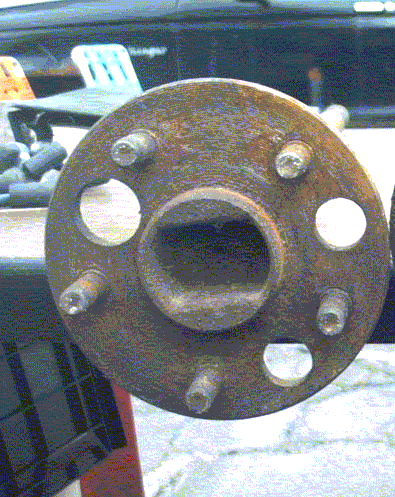
That website is seriously FOS. First off the way to tell the axle spline count only applies to Mustangs and Torino's and the various related cars (Cougar Ranchero Falcon etc...). On trucks and fullsize cars the axle ends can't tell you the axle spline count. Next glaring thing on that page is the BS part that tells you how to ID a Daytona yoke. Yokes come in different lengths both for standard and Daytona yokes. To say a certain length is a Daytona yoke is as far from the truth as can be had. I would obviously avoid that company as they clearly are not well versed in the products. Hawkrod
Last edited by Hawkrod on December 8, 2007, 1:43 am, edited 1 time in total.
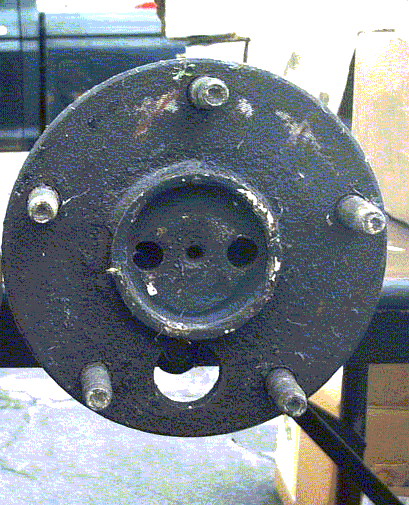
I have a pair of axels that look just like your picture and they are 31 spline. I know that it isn't a perfect way to identify an axel but for what its worth that is what I have. Yours may be different.
Mike Kincheloe
Mikes Old Trucks
I restore old trucks and cars
1962 UNI Short Box, Stock Y block, 4 speed
1972 F 250 4X4 429 4 speed Dana 70 rear
1977 F 350 Camper Special, Ranger, Super Cab
1950 F7 Cab and Chassis
1976 F150 4 Speed 4 X 4
1996 Taurus
I am hoping they are 28 cause I have a case
-but because of how this stuff works for me they are likely 31.
I guess Ill use the tried and true method. Yank em out and count em
I am hoping they are 28 cause I have a case
-but because of how this stuff works for me they are likely 31.
I guess Ill use the tried and true method. Yank em out and count em
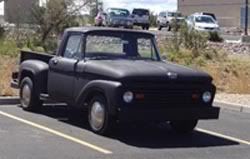
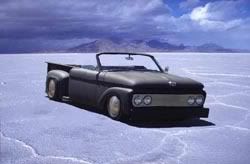
Here is a link to what I did to the 61 Uni. I have about 300 pictures total but I didn't put them all on photo bucket this is just a few to give you an idea of what I did.
It took about 14 months to complete.
The engine pictures are of a 460 I am working on.
Mike Kincheloe
Mikes Old Trucks
I restore old trucks and cars
1962 UNI Short Box, Stock Y block, 4 speed
1972 F 250 4X4 429 4 speed Dana 70 rear
1977 F 350 Camper Special, Ranger, Super Cab
1950 F7 Cab and Chassis
1976 F150 4 Speed 4 X 4
1996 Taurus
the picture and info off that article also suggested that i had 31 spline, my rear end id tag said otherwise, but i did pull mine out anyway when i changed the ring and pinion,
________ Honda Logo history
Last edited by dwbr on February 7, 2011, 12:02 am, edited 1 time in total.
oldtrucks wrote:
Here is a link to what I did to the 61 Uni.
Holy crap, that's some serious sheet metal swapping going on in those pics!
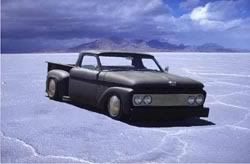
I love this pic.
My "Slickitis" affliction began here...
66 F100 CC/65 F100 CC/66 F250 CC
If it starts to rain, they'll tax the splash.
If you want to fish, they'll tax the bass.
If you plant a yard, they'll tax the grass.
If you don't play nice, they'll fine your *$#!
Being more familiar with the Fairlane rears, I too struggled as to the thinking of the trucks. What I found on most---most-- F100 F150 is that they used the 31 spline axle shafts and cut them to 28 spline. I suppose the logic was to have the heavy axle. All that I have found had the 31 spline style ends w/ 28 splines.
But as you know---there is only ONE way to tell what FORD did.
Tim
INEPTOCRACY: (in-ep'-toc-ra-cy) : a system of government where the least capable to lead are elected by the least capable of producing, and where the members of society least likely to sustain themselves or succeed are rewarded with goods and services paid for by the confiscated wealth of a diminishing number of producers.