
Any bodywork and paint technicians in the group? I'd love some feedback and input.
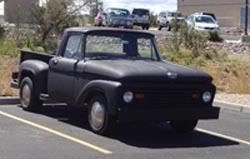
I am painting my flatbed truck myself. I have never been good at body and paint, but I figured I had to eventually get good at it, so I am practicing on my 1967 F350 flatbed. It's just a cab, so I have less area to worry about prepping and painting.
Question is: How do I achieve the nicest finish? I primed, sanded, painted, sanded, painted again, etc., but each time I get a run, or lint or dust in the paint, I sand again. I must have 3-4 coats on there, and as I sand away runs and orange peel, I am achieving a very glassy smooth surface. Part of what I am wondering is this..... if I sand away the blems, and I am left with a smooth surface, what grits of paper could I use to progressively work up to the point where the paint can be polished?
If I use 400 grit to knock-down flaws, do I move to 800, then 1200, then call someone to polish it all out with rubbing compound? This was supposed to be quick, easy and cheap, but instead it's turning into an expensive but valuable lesson. I think 400 may have been too rough for in-between coats, but I had some serious blems to remove, and finer grits would have taken years to smooth out the orange peel and runs.
When I wet sanded the other day with 400, and the water laid on the hood in a smooth sheet, the finish was incredible. Of course, when it dried, it is dull and without reflection. It made me think that a clear on top of the paint was an option, but Sherwin Williams recommended against that because I was only using a single stage paint. My single stage paint would not work well as a base for base coat/clear coat.
I am happy with the lessons I am learning, but I don't want to paint myself in circles forever.
Help??
Dan
Bodywork and Paintwork
-
DanSanDiego2000

- Posts: 275
- Joined: August 14, 2006, 8:59 pm
- Location: San Diego
Dan, once your single stage paint is thoroughly dry it's possible to clear coat it. But it sounds like you have enough paint on it to color sand and buff. When I first started out 600 grit was about as fine a grit as you could get, now they recomend 1500 to 2000 grit to finish your color sanding. I personally don't like buffing so I only do it if I can't talk a friend , who is an excellent buffer, into doing it for me. If you buff it your self just do small areas such as a 2 foot square area at a time. Be very carefull on all your edges or you'll burn through. I'm not sure how much help this is but I'm sure you'll get plenty of help on this thread.
-
BackyardRest
Re: Bodywork and Paintwork
wet sanding with 400 is your problem. If sanding with 400 you will most likely need to repaint each time.DanSanDiego2000 wrote:Any bodywork and paint technicians in the group? I'd love some feedback and input.
I am painting my flatbed truck myself. I have never been good at body and paint, but I figured I had to eventually get good at it, so I am practicing on my 1967 F350 flatbed. It's just a cab, so I have less area to worry about prepping and painting.
Question is: How do I achieve the nicest finish? I primed, sanded, painted, sanded, painted again, etc., but each time I get a run, or lint or dust in the paint, I sand again. I must have 3-4 coats on there, and as I sand away runs and orange peel, I am achieving a very glassy smooth surface. Part of what I am wondering is this..... if I sand away the blems, and I am left with a smooth surface, what grits of paper could I use to progressively work up to the point where the paint can be polished?
If I use 400 grit to knock-down flaws, do I move to 800, then 1200, then call someone to polish it all out with rubbing compound? This was supposed to be quick, easy and cheap, but instead it's turning into an expensive but valuable lesson. I think 400 may have been too rough for in-between coats, but I had some serious blems to remove, and finer grits would have taken years to smooth out the orange peel and runs.
When I wet sanded the other day with 400, and the water laid on the hood in a smooth sheet, the finish was incredible. Of course, when it dried, it is dull and without reflection. It made me think that a clear on top of the paint was an option, but Sherwin Williams recommended against that because I was only using a single stage paint. My single stage paint would not work well as a base for base coat/clear coat.
I am happy with the lessons I am learning, but I don't want to paint myself in circles forever.
Help??
Dan
If you do get flaws while learning or even after use a sanding block specially made for the purpose. they come in different grits. That way you are sanding just the flaw. If you use 400 to sand a flaw or run out you will sand thru on both sides of flaw before flaw is gone.
Can you post pics of what you are trying to get out?
Best for sand and buff is no more course than 800 grit andthat is even pushing your luck. 1000 grit or 1200 is usually good enough.
Then buff using Foam pads not a wool wheel. Any buffing takes practice and special care. Just think when you do figure it out you can charge others. Keep at it and ask lots of questions.
Its also possible if enough paint to start a bit course then go finer then buff. You should be sanding with 800grit before you paint.
Are you trying to just get runs out or dirt or sand scratches? Or all of those?
-
BackyardRest
-
BackyardRest

-
DV65CustomCab

- Posts: 1497
- Joined: July 18, 2006, 4:23 pm
- Location: Elizabethtown, PA

Any paint job is all about prep. The Rustoleum/roller method is no different. You need to have a smooth, clean surface to start with.
The biggest problem with the Rustoleum is it simply will not have a shine unless you wet sand and then buff it with a professional buffer (Harbor Freight ones won't work). If you can find a color in Interlux Brightside that you like, that paint will come out with a beautiful gloss without buffing (that's what I used). However, you may still have to sand and buff horizontal flat surfaces as they can be tricky to get completely smooth.
I agree, the OP's problem was the use of too heavy a grit. I used 800 between the coats of my roller job.
Stop The Longbed Hate! 
'65 F100 Custom Cab bought 2002/Sold 2014
Now: '93 F150 Lightning
'65 F100 Custom Cab bought 2002/Sold 2014
Now: '93 F150 Lightning
well i got an air compressor and a spray gun so i will be trying out it that way not rolling it on. Never heard of anyone spraying it on but it is enamel paint so it should be good as long as i thin it good enough. So i don't know if that will make a difference with shine. What is considered a professional buffer?
-
blackagatha
- Posts: 2582
- Joined: March 10, 2007, 12:49 am
- Location: Arizona
-
BackyardRest
Thats pretty much what I was talking about, they also make them that look like mini sharpening stones. You can buy them in many different grits, easy to shape on a bench grinder for inside curves etc. Just soak them in warm water until they sink then use them.MadMaxetc wrote:they also make a small block that has a razor in it to shave off runs, then sand.
I will take a few pics of these products to show what they look like
Run Blocks & Nib Filesblackagatha wrote:MadMaxetc wrote:they also make a small block that has a razor in it to shave off runs, then sand.
woah! cool
http://www.eastwoodco.com/jump.jsp?item ... pe=PRODUCT
-
DV65CustomCab
- Posts: 1497
- Joined: July 18, 2006, 4:23 pm
- Location: Elizabethtown, PA
The only buffer worth it's weight is a Porter-Cable (or the one Griot's Garage sells, which may be the same thing). I had a Black & Decker I tried...junk. There's just no getting around it; you need a good buffer for it to work.
Stop The Longbed Hate!
'65 F100 Custom Cab bought 2002/Sold 2014
Now: '93 F150 Lightning
'65 F100 Custom Cab bought 2002/Sold 2014
Now: '93 F150 Lightning